 |
|
John Dandola Author Interview INDEX (click on the subject) Influences • About Copyrights • West Orange History & Historians • West Orange Situations • "West of Orange" & Unwanted Associations • Slights to Famous Residents • Long Association with the Municipal Pool • Research • Courtesy • Discourtesy • About Bad Reporters • Hammond Castle Situations • Seton Hall Situation • Classic & B Movies • Creativity Pitfalls • Reviews & Reviewers • Living in W.O. • Lawyers & Ad Men • Views on Education • Writing Groups • Views on Incorrect Grammar • Grammatical Pet Peeves • Regrets? Just One • Where are you from? How— if at all—has your sense of place colored your writing? J.D.: I was born and reared in West Orange, New Jersey, where my family has lived for generations—one branch of the family has lived in this immediate area since before The Revolution and before there was a West Orange. Thomas Alva Edison lived and worked in West Orange for nearly fifty years; the world's first motion picture studio was built in West Orange; my grandfather was a personal messenger boy to Edison; the youngest Edison son, Theodore—a successful inventor in his own right—taught me how to play chess (although I haven't played chess since then). Because of that tie between people and places, I had a practical view of history from a very early age and my writing—especially in my mystery novels—tends to explore that view. History is, after all, a series of inconsequential little happenings which eventually lead to something monumental. I've always liked the thought of that. • When and why did you begin writing? When did you first consider yourself a writer? J.D.: No one in my family was a reader but they were great storytellers. During my childhood, people were always around—my grandmother's house seemed to be the center of everyone's world and my grandfather's barber shop was the unofficial town hall. I heard tales about my parents' youth and my grandparents' youth and the town and the neighbors and local politics—all in a very human light. I loved to listen because for me those stories were akin to reading. I was always a reader. As a kid I was even known to thumb through the encyclopedia for hours on end. To this day, when I help my wife unpack the groceries, she accuses me of wasting more time reading the packaging than storing the items on the shelves. But I learned to express myself in writing by reading and old habits die hard. As a junior in high school, I had a wonderful English teacher named Mr. Robert Whelan. Although he had a tendency to force us to write essays explaining poems which we all hated, he also took that to the next level and taught us creative writing—but creative and still adhering to the proper rules of English. It opened whole new doors for me but I already loved movies and that's what I leaned towards. While studying filmmaking in college, we were required to write a screenplay. My work got praise and even worse, was shown on an overhead projector to the class as a proper example of how to tell an interesting story. The professor then took me aside and urged me to pursue screenwriting. I did, eventually selling several scripts into "development hell" and working as an uncredited script doctor. Writing novels evolved when it was deemed that my screenplays have the odd combination of being both literary and visual. • Who or what has influenced your writing, and in what way? What books have most influenced your life? J.D.: As for the so-called classics, The Scarlet Letter (without the extraneous Custom-House introductory) was absolutely mesmerizing to me in a way I never expected from "a dry old book" required as high school reading. The same can be said of Jane Eyre. Unlike what most authors claim, I always found Hemingway foreign to my thinking; Dickens and Scott far too wordy; and although his prose is beautiful, Fitzgerald never seems to get to the point. As absurd as it may seem, I probably learned the most about writing from reading Ian Fleming as a young teenager. Yes, I'd be the first to argue that what Fleming understood about women could be fit into a thimble with plenty of room left over but his spare style made me realize that a very accurate picture can be painted by employing the correct word choices—that appealed to me as did the fact that he was only a popular and commercial novelist, which wasn't intimidating • What are you now working on? J.D.: My fourth stage adaptation of the venerable Father Brown mysteries premiered in January 2011. Previously I also did an adaptation of The Man Who Was Thursday. Both Father Brown and Thursday are creations of G. K. Chesterton. The adaptations were undertaken at the request of the Celtic Theatre Company based at Seton Hall University. I've also written several original plays which were staged there. The fourth of my modern-day mystery series was published in December 2010. The fifth of my 1940's mystery series was published in December 2013. I have set the premise for the next in each series, which enables me to write scenes for either as they come to mind until I have to time to sit down and work solely on each novel. I have always worked like that. The second volume of my biography of inventor John Hays Hammond, Jr., a protégé of Thomas Edison and the builder of Hammond Castle Museum, will debut in 2015. • Reviewers and readers of your novels always mention your ability to create a complete visual sense with relatively few words. You yourself often make reference to visuals such as art, design, and photography. Does your novel-writing derive from a link between all of those things and your screenwriting? J.D: Well, yes. The first talent I fully realized was art. Ever since I was able to hold a crayon it came very naturally and very easily. For whatever reason, I was always able to visualize scenes and put them into pictures and words. I approach writing in the same way as I do a drawing or a painting: I start with a sketch (in words) and then I add detail. In college I studied fine art at the same time as I studied film, television, and theatre. That's where everything began to come together. I earned a living during and after college by combining my set design skills with my love of history in restoring some of the area's Victorian mansions. My illustrations and photographs have appeared in travel, history, and museum publications. The arts and history and storytelling all co-exist very comfortably in my head and they give me a good foundation in being creative. • What is very evident in your 1940's mysteries is that you portray Hollywood personalities as very real flesh-and-blood people because you are very much a film historian. Did your grasp of film history come before or after your involvement in movie-making? J.D.: Simultaneously. I've always been fascinated by how things evolve. How things were originally done gives rationale as to why we do those same things now. It makes techniques much more understandable. Movies always interested me not only as a cultural phenomena but also for their technical and business aspects. I don't play the usual guessing games about who won what Oscar in what year. I've never found that important. It's like memorizing dates; if you don't put them into context, what difference do they make? Nowadays, we tend to approach anything made before last year in terms of snarkiness. We mock the style of clothing even in old television reruns rather than deal with the storytelling. We are scornful of the technical approach rather than understand its limitations during such and such an era. That's just ignorance on full display. It's why modern-day filmmakers don't fare particularly well in recreating decades of the twentieth century—that, and the fact that the brims of the fedoras are never quite the right size or worn properly and that modern-day curse words and morals were not prevalent in society as a whole back then. • Are you a big proponent of classic movie festivals? In theory, yes. I think Turner Classic Movies does them correctly in restored historic movie houses with the original huge screens that just leave you in awe. But then there are the local knock-offs (and we have one in West Orange) which are just copycat attempts with little firsthand knowledge. Imagine paying to see a movie which already played in the past three months on TCM but on a screen in a multiplex not much bigger than your living room's plasma TV. Then add to that discussions by people who are hardly experts. In town here, we've had only one speaker who was a bona fide major league movie producer. The rest are more or less just fans and the occasional newspaper movie critic. With the exception of the bona fide major league movie producer, that doesn't give unsuspecting audiences any real insight or correct impressions. Let me explain further about how that can go wrong. Years ago, the host of one of the on-air classic movie channels spouted off some erroneous information. (It happens all the time. In fact, the female voice-over announcer at TCM continually mispronounces the names of very famous actors and actresses and she is never corrected.) The erroneous information this host spouted off was that Charade was the very first movie in which Cary Grant allowed the true grey color of his hair to be seen. For weeks afterward, all I heard was that same information parroted in restaurants, in meetings, in class, anywhere I was known to have a connection to film. It was like everyone thought that they had discovered some nugget of hitherto unknown information. The entire problem was that no one—including the on-air host had bothered to watch previous Cary Grant movies. The actor had gradually been allowing grey to creep into his hair since at least 1950—years before Charade! I can't even give an explanation as to how or why such an ill-informed statement was aired. I am stunned because such things are so easily researched. What's easier than watching a movie? Here's the biggest instance of misinformation: no one seems able to correctly define a B-movie—and it's how I know a movie critic doesn't know what he or she is talking about regardless of how many esoteric foreign films they can cite in a review. Hint: "B" is NOT a label of a quality or grading. B's were a fundamental part of Hollywood's Studio System and yet nearly all modern-day critics have no clue as to what they stood for or how to properly describe them. • But you explain B-movies so well in your novels, why isn't it grasped? J.D.: It goes back to repeating and repeating and repeating misinformation. If you hear it on TV or read in on the internet, it must be true. And again, when in doubt, be snarky and dismiss the whole subject or belittle it. Why learn the importance of explaining things in simple serious terms? • Copyrights seem to be a very sensitive issue among members of the creative community nowadays. How would you explain copyright in simple serious terms? J.D.: If you climb over a fence that says KEEP OUT, PRIVATE PROPERTY and you then drill for oil inside that fence and you strike oil inside that fence, would you think the oil was yours? No! Consider a copyright label to be the sign and the fence. Consider whatever the copyright label is attached to as the oil. It'll steer you clear of most infringement problems. • That seems to be a simple enough concept. Why are there so many problems as of late? J.D.: Most people misperceive that because they can look at something created by someone else, they then have the right to just grab it up and use it for their own devices without asking. Their inevitable reaction when caught is always, "Who do you think you are that I have to ask or pay to use your work?" They don't want to comprehend that they are taking away someone else's livelihood derived from talent and training. The ease in reproducing almost anything on computer or posting anything and everything unchecked on the internet further blurs the lines in what we assume we are allowed to do. There's an episode of Bonanza in which Jonathan Harris portrays Charles Dickens defending his novels from being illegally published in this country (an actual occurrence). It's a perfect lesson in copyrights. Dickens is continually perceived by the public as a prickly egotistical trouble-maker who is unwilling to share his wondrous gift for storytelling with America. The public feels—quite unreasonably—that since they love to read Dickens' stories they therefore have a right to do so and it shouldn't matter whether American publishers aren't paying Dickens. People only come to understand the situation when it is explained that illegally making money off someone else's creations without payment for use of those creations is akin to rustling cattle or horses. It's that simple. Even in this day and age, the public refuses to grasp the concept that someone who creates has to make a living and how does someone who creates make a living? By selling and controlling the use of his creations. The public has lost the civility to ask before taking and the understanding that creations are goods which must be purchased and that the person who did the creating should always be credited. A West Orange politician who has stolen from me on multiple occasions and who has had to pay monetary damages on each one of those occasions actually said within earshot, "I'm getting real tired of having to pay that [expletive] every time I use something of his without asking permission!" Yes, that would be one of the definitions of copyright: you have to ask for permission otherwise there are legal reprocussions. The further punchline of that joke is that this guy is a lawyer. The first time this politician was caught (he had the arrogance to use my copyrighted material in one of his campaign mailings), he actually claimed he had used my work as a "compliment" to me. When I confronted him publically as to why then he hadn't bothered to ask my permission or credit the work with my name, he realized for possibly the first time in his life that he wasn't going to be let out of a lie. A few years later, his political cronies threw together a book which contained more of my clearly marked copyrighted work. After they fell all over each other in the book's preface thanking themselves for "their work" on the project, when confronted, none of them could suddenly recall exactly which one had been responsible for lifting my copyrighted material. The political mind seems to think that not remembering is some sort of defense. They were very surprised to find out that my lawyer had the legal right to order all of the books to be pulled from sale until the infringing pages were removed and a substantial monetary settlement was paid. There was a great gnashing of teeth on their side but I didn't doubt for a minute that they'd do it again because in order to recognize and respect someone else's intellectual property it takes a certain ability to make moral judgements. Time after time, these people have proven not to possess that ability. To them, I'm the villain for not allowing them to get away with it. How's that for lop-sided logic? On October 20, 2001, yet another possible case of infringement raised its head. Someone who may be a go-between—the same few people are always involved—phoned me concerning a whim to reproduce part of my West Orange Fire Department Centennial Album. I counseled against such an action and then notified my attorneys. Then sure enough, in September of 2003, the local history book I had originally sued for copyright infringement was re-released in a second edition still including my exact same materials. I sued again and was awarded monetary damages again. Have they learned their lesson? Of course not. During the summer of 2004, a new member in this local political clique had the audacity to contact me about allowing passages of my West Orange novels to be read during a politically-motivated tour of the historic part of town! Because a new member asked, was I somehow expected to forget what they had all done to me over the years and suddenly allow use of my work for their self-aggrandizement? The politician and every committee to be involved were warned via Certified Mail. It is utterly amazing how some people never learn. In June of 2006, they tried to strike one more time. That's when a newspaper article revealed that I had written a town history (entitled Greeetings from West Orange, New Jersey) specifically for use by only one grammar school. The reason for it being available to only one school is because a friend of mine teaches the course there and she was beside herself about the lack of accurate materials supplied about the subject. In dedicating and donating the book to the one school, I was both giving something back and controlling my work so that it couldn't be stolen by the usual scoundrels. But as soon as the newspaper article appeared, those usual scoundrels came out of the woodwork phoning both the office and the library at that grammar school trying to obtain copies. It was a maneuver to circumvent dealing with me. Since I had informed both the school office and the school library that such contact might be made, they turned the scoundrels away. Funny, it's always the same people trying to grab onto my work and they still don't have a clue that I know they were all in on my previous copyright infringements. As late as August of 2006, they even tried to get copies through a library distributor but my publisher put the brakes on that very quickly. And so it continues… • In this immediate area of the country, one can't but help know that you also ran across copyright infringement problems with your alma mater, Seton Hall University. Would you care to comment? J.D.: That mess will be ongoing for years to come and my attorney is involved as a watchdog so there's not much detail I can go into. The problem lies directly with Seton Hall's G. K. Chesterton Institute for Faith & Culture which was clearly made aware of what rights were and were not granted in the performance of my plays during the annual Saints & Sleuths program. In their typical tunnel-vision manner of focusing only on themselves, the Chesterton Institute didn't simply infringe on my copyrighted plays, their actions cost me a lucrative publishing-production deal for those plays. It wasn't just personal, it was financial. When caught covering up their infringement, instead of apologizing and making amends, they got arrogant and sanctimonious. An investigation has connected all of the dots but unfortunately, when Seton Hall was informed of this extremely serious transgression, they chose to do what the Catholic Church seems to do best—make believe that nothing happened. That only compounded an issue from which they could have easily extricated themselves. Over the course of six years, I wrote eleven plays—spending weeks, sometimes even months of full-time work on each play. At no time during those six years, did the person who personally requested that I write the plays ever have my back. When the copyright infringement took place and I explained to this person that due to his lack of protection, no more performances could be given, he actually had the nerve to become angry with me. That's correct: angry with the guy trying to protect his work and his livelihood and not angry with the people who had stolen that work and impacted that livelihood. The whole situation was like dealing with children who had been granted advanced degrees and had no clue about the real world. What's more, the Seton Hall Alumni Association turned an equally blind eye and deaf ear when they were infomed of the goings-on. But their unresponsiveness clearly showed that I hit a nerve. Once I kicked up my variety of legal issues, heads must have rolled behind closed doors because Seton Hall finally and suddenly began to properly credit later playwrights as dictated by the Dramatists Guild. That was something they conveniently and intentionally failed to do for each and every play I wrote no matter how many times I railed about it. I did the work but the only names credited in Seton Hall advertising were those of the priests who would show up to give lackluster, often uninformed, and quite dreary commentary about my plays. How in any good conscience do you leave the playwright's name off the works he created? Or why wouldn't you have the playwright involved in the discussions about his own plays? It was of little wonder why the audience departed in droves during such after-performance "priestly talks" which put a pointless damper on every evening. And the Catholic Church wonders why it's its own worst enemy. • Keeping things local, in the past few years, local history has been a rediscovered topic. You have always championed the importance of that even when it was not in vogue. Lately, there seems to be a dueling match going on in your town of West Orange from which you have remained noticeably absent. Why have you chosen not to be involved? J.D.: To become involved in this "dueling match", I would have to feel threatened. I see or feel no threat. My place in the local scheme of all things historical is well-known. Those in power who do not want me acknowledged are the ones who have tried stealing from me and have been sued and/or publicly embarrassed because of it. Formally acknowledged or not, in all cases, behind the scenes, I still wind up being the guy who is asked for verification by people who at least suspect that info given by history buffs might be incorrect. Although I do this professionally, I will also be the first one to admit that I respect anyone who is a true history buff and does thorough and accurate research. In my own history pursuits, history buffs are often able to shed more light on niche subjects than scholars who tend to look at the whole. That said, West Orange has gone through several "wannabe historians" who have completely muddied the waters. Unfortunately, the vast majority of the town population doesn't know enough to raise such questions. The single most annoying response in such matters is, "Well, he cared enough to at least tell us something about the history," which completely misses the point. If the information supplied is incorrect, it doesn't matter how much the person supplying it "cared". • How would such misinformation come about? J.D.: Often, it's a lack of reading comprehension when interpreting old sources. I had one town department e-mail me saying that a particular "wannabe historian" had recently told them that their original physical location went completely against town tradition. Well, town tradition held because I had researched it long ago and I had seen the evidence for myself but the "wannabe historian" had misread the 19th-century source. He also misread who was the very first head of that department. There also seems to be a rampant inability to properly read maps—the same particular "wannabe historian" constantly places a well-documented World War II incident a quarter-mile from its actual locale. The incident was very public. There was no cover-up. There were witnesses quoted in multiple newspaper articles. There is an official report. Every one of those sources specifically pinpoints the exact spot where the incident took place. I know because I used the incident in one of my mystery novels. But this "wannabe historian" repeatedly misses that location by a quarter of a mile! How is it even possible to screw that up? Then again, this would also be the guy who continually falls back on the line, "legend has it" instead of finding out exactly why "legend has it". He has even gone so far as to pass off a 1920's architectural drawing of a proposed building annex as real never bothering to compare the drawing to reality. Even the most cursory scouting of the locale would prove that the annex had never been built because it required dynamiting solid rock which was never done because the rock is still very much intact today. He also doesn't realize the protocol of not giving out addresses of private homes. If a site is on a local, state, or federal registry, it is perfectly okay to give out its location. If it is not, you simply don't allow people's privacy to be violated—it's just common sense and common courtesy. • So you have strong feelings about local history buffs. J.D.: I do. On the very-plus side is an acquaintance of mine, named Doug Alford, who has an extensive postcard collection and he is quite knowledgeable about West Orange. He is polite, low-key, and he used to write an informative column in the town quarterly. I'd trust anything he told me and have said so countless times to countless people. On the negative side is the "wannabe historian" who doesn't even live in town—he "loves" West Orange so much than he moved out decades ago but now he figures the town is easy pickings to make some sort of "name" for himself. He also has a postcard collection and he runs a web site and he is fast becoming the history-buff equivalent of a crazy cat-lady. Constantly craving attention, he insinuates himself into issues where he doesn't belong and thumps his chest while spewing out misinformation. On top of that, his writing is so atrocious that he wouldn't pass a high school English course. He has no grasp of grammar or the fundamentals and he hasn't met a cliché he doesn't like. But the town newspaper still has him write a weekly column. He is also allowed to repeatedly, inappropriately, and unprofessionally (especially on the newspaper's part) use that column as a pulpit to spout off about his parents, grandparents, aunts, and uncles none of whom has any historic significance whatsoever. That is not within the purview of a "history" column. He is supposed to be reporting on West Orange history not spotlighting his family. It irritates a great many people and I hear those complaints all the time. I'm not sure what I find more bothersome: his inability to write; his inaccuracy; or his sheer ubiquitousness. Besides, how can you take seriously anyone who looks and behaves like a live-action version of Peter Griffin from Family Guy? Even though I didn't want a "dueling match," the "wannabe historian" has gone out of his way trying to start one. For years, in a very calculated childish fashion, he has made sure that my name is never mentioned even when he tries to tie himself to the long-deceased town historian who was my mentor. He oversaw a time capsule but he made sure that my West Orange books were not included because that would cause his credibility to be questioned. His constant childish spiteful approach with me was a huge mistake because I will put up with just so much for just so long. I have a tremendous dislike for pretenders. I've worked very hard and earned my credentials. Pretenders usually don't need much help in exposing themselves as is quite evident with Mr. Wannabe. What I also know from professional experience is that anyone who continually needs to use a title like "official" in front of his name—just like this guy does—is much too desperate. Imagine him bragging in his bio that he was the "national editor" for a newsletter but then adding that the newsletter's circulation was only within a handful of states. In this country, "national" means within all fifty states! Yes, he may have been some sort of an "editor" but it certainly wasn't on a "national" level and it was only for a newsletter. When you sensationalize such idiocy as that you make yourself look like a fool. Similarly, when he pastes a smaller photo inside a larger photo in a newspaper layout, he gives himself a credit of "graphics by" under those photos. Such a credit is not justified or warranted. Graphics have to do with real design. I know; I worked as a graphic artist and I taught graphic arts. Don't claim some fancy and incorrect credit for yourself because you purchased a software program for your computer. Again, you only make yourself look like a fool. It's like a high school student joining a club solely to show off on his college application. The cherry on top of all this happened during a West Orange Zoning Board meeting in which the "wannabe historian" was once again forcing his way into an issue which didn't involve him. Thankfully, the Chairman of the Zoning Board actually had the presence of mind to inform the "wannabe historian" that he possessed no credentials to be an actual historian. Once in a great while, the truth actually gets spoken out loud. He made himself look a fool and he was called on it. • Why is this "wannabe historian" even given any credence? Unfortunately, I'm partly to blame for that. When a publishing company I had to sue multiple times for infringing on my copyrights finally pulled their West Orange title (basically just a book of postcards with captions and little text), they didn't have the nerve to approach me to undertake the project properly. Instead, they turned to this wannabe guy who had done a postcard book about another area of Essex County [N.J.] for them. If you've seen this publisher's other books, you know immediately that they just want product. Quality is never part of their equation. Copyediting and fact-checking are totally non-existent. But this guy still actually thinks he's a real published author and what's more, people who know nothing about publishing or writing or research actually misperceive him to be a real published author. No one realizes or seems to care that they are being duped. In West Orange, it's always about what's easiest and the most politically expedient. There's a long-standing West Orange political defense which, I'm informed, this wannabe guy has begun using when it comes to explaining me away. That long-standing political defense goes like this: Pick a fight—slight someone, steal from someone, don't credit someone, whatever—then be shocked as hell when the targeted person strikes back. The shock is then followed by publicly whining and justifying and name-calling then claiming that the obviously intentional targeting was really just a misunderstanding all the while pleading innocence and then actually blaming the person who was targeted for shedding sunlight on the whole predicament. When I am the targeted person, I can intelligently make my case point-by-point and the public can read loud and clear that I am not wrong. I know the game. I learned it from the person who invented it here in West Orange and I've been successfully shedding light on these goings-on for a great many years. The bottom-line is that my credentials and my track record in my chosen fields trump everyone else's in town and there is simply no reason not to believe me. I've learned to live with the political chicanery but I'll never get over West Orange as an entity being continually shortchanged by those who are placed in charge. • You seem to have a real love-hate relationship with your hometown. Can you explain that? J.D.: We all know that it is possible to love a particular someone or something that is not good for us. West Orange is like that for me. I had a very idyllic childhood there—which should count for something—but it is not a happy place. West Orange may now be a twelve-square-mile municipality but its mentality has never evolved beyond that of a small isolated hamlet with a speed-trap scam. Everything is always predicated on some nasty political undercurrent or hidden agenda which usually only serves to shatter friendships. To paraphrase actor David Niven in his assessment of his pal, Errol Flynn: "You always know where you stand with West Orange because it always lets you down." West Orange has a long-standing history of that—of taking and not reciprocating. It has a genetic defect—if such a term can apply to municipal government. Besides countless personal experiences, I also have documentation corroborating the same kinds of goings-on for generations as far back as the 19th century. One of the most embarrassing incidents happened during the ten summers I was a lifeguard (and later, assistant manager) at the town pool. The pool is named for Ginny Duenkel, a very nice, modest, local girl who became an Olympic swimmer—she won a gold medal and a bronze medal at the 1964 Tokyo Olympics. About a dozen years after Ms. Duenkel's accomplishment, I actually appeared before a town council meeting and argued on her behalf because when Ms. Duenkel married and relocated out-of-state due her husband's job, some nitwit on the West Orange Town Council actually proposed removing her name from the pool because she was no longer a resident! Her name has thankfully remained on the pool and, hopefully, she never heard about the one-time nonsense drummed up about it. • Has West Orange embarrassed itself in similar ways with other famous residents? J.D.: Another example would be our so-called "state-of-the-art" outdoor theatre (gained by a deal with a land developer for which we actually wound up paying much too high a price in the tax rebates and tax concessions allowed in return). This outdoor theatre is so "state-of-the-art" that it can only be used during the warm months and patrons have to bring their own lawn chairs! For a few years it was used for a town acting troupe which did itself in with too many backstage back-stabbings and much too much bickering so now it's only used a handful of nights during the summer for jazz concerts. But the best part is who that theatre named for. Is it named for the bona fide stage, movie, and television actress who grew up in town? Joan Caulfield was her name. Her career included Broadway, major motion pictures, her own television show, and a body of work which spanned from the 1940's to the 1970's. That is no small accomplishment in any era and, what's more, she remains the favorite actress of the very "in" present-day writer-director Joss Whedon. So wouldn't it seem more than logical that the town-owned theatre would be named for her? No. Is it possible that the theatre is named for the three recognizable television actors who grew up in town? No. Of all people, the theatre is named for Oscar Schindler, a truly heroic figure but one hardly known for his theatrical talents. It was pure political pandering. And I get that politics is about pandering. But use some common sense! We had a real theatre, movie, television actress who grew up here. It is more than appropriate that the town name the town-owned theatre for her. But the bottom line is that West Orange is clueless about its own history. Joan Caulfield had been forgotten. The politicians only looked as far as the ends of their own noses and saw the voting block they wanted to appease. Both of those incidents perfectly sum up why West Orange is not—and never has been— appreciative about anything or anyone. It has never been a town which is literate or cerebral or imaginative or artistic or courteous or appreciative. Which certainly explains why it doesn't have even a basic grasp of aesthetics in the town's physical appearance. • Let's get back to Ginny Duenkel and the municipal pool named for her. You've often related situations to experiences you had there as a lifeguard. Was that a formative part of your growing up? J.D.: Yes. It's that old adage: "Everything I know about life, I learned" as a lifeguard. I had always been raised to have responsibility but that job reinforced how important a trait it is. Being a lifeguard taught me about leadership and how to treat people and about human nature. It also taught me to have a very poor opinion of politicians. They always soured what would have been and should have been the happiest summers of my youth. • How so? J.D.: I would go to work, be conscientious, solve problems, resolve issues, tidy things up, make repairs—we did that back then, we didn't just sit on guard stands and look pretty, we maintained the place. At the time, the municipal pool was new and the center of the town's existence so a great many pool members were very politically-connected and they took my work ethic to mean that I was looking to impress so that I could be noticed and then get a full-time town job or even run for office. They just couldn't conceive that someone took pride in his job without other motivations. They couldn't comprehend that since I was spending twelve hours a day in a place, I wanted that place to be neat—period. My only rationale was that I was—and I still am—a stickler for upkeep. At that young age, it made me realize that politicians and I lived in two completely different worlds. They simply and half-heartedly catered to the whims of constituents while I undertook projects for the sake of accomplishment. Those two concepts never proved to mesh well. It was the first time I experienced politicians and their cronies taking public credit for my work without any mention of my name whatsoever. It left me with a permanent sore spot about being used. • So your dislike of politicians goes back that far? J.D.: Absolutely. And the politicians still always try to have the last say. I worked at the municipal pool for ten summers. I started as the youngest lifeguard and wound up as assistant manager. I was the one consistency there each and every summer. There were generations of kids who actually thought I owned the pool. Twelve years after I left, with published novels and Hollywood contracts by then under my belt, I got a call from my former boss who had just been appointed Director of Recreation. It seemed that the guy who had been in charge of the pool for the past few years had allowed it to fall into quite a bad state of disrepair. Being a political crony, this guy spent his days constantly complaining then finagling ways to get ahead and earn more money by doing less work. He never did a damn thing except to show up—and he wasn't much of a swimmer to boot. But as big a thorn as he was in the department's side, he had a contract and connections and couldn't be let go. The issue at hand was: Did I have time to come back and refurbish the pool and the grounds and the locker rooms before the season started? I like my former boss. I consider him a close friend. We're still in contact. I owed him and I had time on my hands so I went back and did the job while tolerating the guy who had run the place into the ground. Every time I turned around, he was there under foot but lending no help. In the end, he pulled a few political moves on me trying to stab me in the back and claiming he was responsible for the work but even his supporters knew he was incapable of doing much of anything himself. Flash forward twenty-five years and the newest Director of Recreation—who I grew up with and who knew firsthand of my close association with the town pool—held a ceremony to dedicate some part of the pool property to the do-nothing who had run it into the ground and whose ass I had to come back and save! That guy deserved absolutely nothing but he got it anyway. West Orange at its politically-blind finest and exactly why it makes itself look both inept and moronic to neighboring towns. If honoring the do-nothing guy was not insulting enough, the pool now runs an annual contest to "choose the most popular lifeguard." Being popular is not and never has been part of the job description. Keeping people safe is the whole task at hand; pools can be deceptively dangerous especially when large numbers of people are involved. Holding popularity contests undermines the whole process. It's just more twenty-first-century feel-good nonsense. What's next? A petition against the movement of celestial bodies in order to prevent lifeguards from getting sunburned? • Let's get back to the subject of writing historical fiction. Research for history courses or term papers is usually viewed as a dull boring exercise but research as background for you own stories seems to be quite an interesting undertaking. Have you run into many obstacles? J.D.: I like research and I tend to do more than I need but that often helps me in recreating an entire picture in my mind and how I choose my words even if I don't have to present all the little facts I run across. General things like dates and places are usually not a problem in recreating historical context but the intricacies of daily life can present quite a few snags mostly because those are the things taken for granted and not expounded upon when you look at period sources. For instance, when writing one of my Wind mystery novels, I wanted to know how corn was stored and transported during the 16th century. Granted, it was for one simple sentence but knowing would help me create the scene. The sixteenth-century sources I had just said it was shipped. They knew how it was shipped because it was a process done every day so they never explained in what form or in what conveyance it was shipped. I had to track down an archaeologist to confirm how it was done. He confessed that I had run across one of the most frequent problems in his field: ferreting out how mundane tasks were accomplished. In writing about travel during the 1940's for my Dead mystery novels, I go about things as though I was actually planning the trip in making decisions about transportation carriers and accommodations and, of course, like anyone planning a vacation, I often run up against problems. • What sort of problems would those be? J.D.: While writing my fifth Dead novel, preliminary research turned up incorrect information (on the internet, of course) that my airline of choice, Pan Am, was not making its run to Mexico in 1943 due to its involvement with troop transport. The second choice was American Airlines which had just begun Mexican flights during that time. I made multiple attempts to contact American Airlines' C. R. Smith Museum, which openly invites e-mail inquiries, but no replies were ever forthcoming. This is not the first time for such an occurrence since I contacted them several years ago about another project and even then silence was their only response. What's more, American Airlines customer service was rather less-than-cordial in response to the inquiry I then forwarded to them and they quite literally refused assistance. I suppose I should thank them because like any traveler faced with rudeness, it made me reassess my options and closer scrutiny revealed that Pan Am had not ceased flights to Mexico in 1943 and their more direct route worked much better for the logistics of my story. I've spent a lot of time in Mexico so I am more than familiar with the land and the terrain and the people. But I still ran into similar non-responsive problems with the Mayaland Lodge, situated among the ruins of Chichen Itza itself. The hotel has operated since 1925 and has always won raves even in vintage travel books. Unfortunately, they, too, did not respond to e-mails no matter how many times I made the attempt. Had I been trying to book reservations, I would have gone elsewhere and such treatment of any potential customer is more than a little perplexing. It truly gives an author a sense of sadness when setting a novel at an establishment known historically for its hospitality yet to experience less-than-hospitable reactions from that establishment in the present. After much research, I was able to find vintage photos of the property on my own in order to recreate the hotel as it was in the 1940's. If that wasn't enough, I was referred to an "author" about some vintage travel materials and a specific travel brochure. Unfortunately, the ensuing communication took on a softened but obvious sales pitch from him. Even though this "author" admitted that the information I was seeking was "outside the scope of [his] forthcoming book," he asked if I would wait several months to buy that book regardless. If not, he was certainly willing to e-mail me photos from a different vintage travel brochure other than the one I sought. But it was on the proviso that I reimburse him for what he had overpaid for that different vintage brochure at an online auction. A nominal fee is one thing, paying full price and not owning the thing is absurd. Needless to say, I found my own copy of the brochure at a fraction of the price. What's more, I knew from our initial contact that some of the information he gave me was incorrect so I steered clear of him. • One never thinks that all of that could be involved in writing fiction. J.D.: No, most people don't but on the plus side, I've run across a great many people who have been very generous in sharing their expertise and, thankfully, those generous people far out-number the examples of rude ones I just mentioned. • It seems that courtesy is a prime motivator for you. J.D.: It's probably the easiest and classiest way to conduct oneself yet it's astounding how it seems to elude so many people on a personal or professional level. They are even shocked when it comes back to bite them. I tend to treat people the way I like to be treated. I expect the same in return. Sometimes, my expectations are much too high... • Have you found a way to deal with a lack of courtesy? J.D.: We're not talking about flubs or gaffes or misunderstandings, we're talking about flat-out intentional rudeness. When I'm confronted with it, my first reaction is anger. My second reaction is to never again deal with the person or persons responsible. Why? Because such a lack of manners not only speaks volumes about the people with whom you are dealing, it is something which will persist therefore making a working relationship—or even a social relationship—extremely difficult and uncomfortable. I need a comfort level. But the much more serious scenario is that intentional discourtesy is often a very calculated bullying tactic. I have witnessed it used as such in so many arenas. I have a great distaste for bullies and I've never allowed myself to be bullied. That's why my first reaction is anger. • Have you been plagued by such discourtesy anywhere else? J.D.: As an historian. I've had my brain picked by journalists but not been credited as the source even when I instructed upfront that it was part of the deal to do so and everyone else used in the article was credited. One specific, rather poor reporter who flailed around on this local beat for The Star-Ledger, had done it continually to me because (as third parties have explained) he seemed to think any mention of my name would overshadow him—especially in any article about the Edison, the Man World Premiere. He took a buyout when the paper downsized but while he was on staff he never figured out why I stopped helping him as he churned out his incorrect and inaccurate articles. I surmise that at some point, he thinks he's going to be able to compile a book of his local history articles and get it published. It seems doubtful. But the snubs don't always just come from unprofessional wannabes. I have even experienced snubs on a scholastic level. In the fall of 2005, I was put in touch with the West Orange High School teacher who runs an after-school club about screenwriting. The intent was that I could bring something of professional merit to the kids. I made contact via e-mail and introduced myself. The guy never even had the courtesy to reply. Not even a "thanks but no thanks." He probably perceived it as putting his after-school-activities stipend in jeopardy. For me, it was a great disappointment because you get to a point in your career when you want to share what you've learned and where better to start than at your own high school? • It's almost unimaginable. Is it too much to expect professionals to act professionally? J.D.: Apparently so, as demonstrated by their actions. I'll give you another very worrisome example. In late spring of 2006, I was contacted via e-mail by a woman who claimed to be an "associate professor of journalism." She was writing an article on John Hays Hammond, Jr., and she asked if she could use my Hammond Castle web site for research. I granted permission with the proviso that the site be credited in the article. I have kept everything on file because I got the distinct feeling from her tone that this article was going to be problematic. That feeling of dread only increased with her ensuing e-mails. Sure enough, when the article appeared, it was not terribly well-written and, contrary to my advice, she had included all of the inaccurate fabrications which the staff of Hammond Castle Museum continues to heap upon visitors. She also went out of her way not to mention any of my Hammond books and, to top it all off, after lifting a passage verbatim from my web site, no credit was given to my source material. The magazine's publisher has apologized and printed a correction. But what is most shocking is that this woman is teaching her methods to college students. A month or so later, a second magazine writer contacted my publisher in order to buy a copy of my Hammond biography and she went so far to explain that she, too, planned to use my work as the basis for a magazine article. At least when the error of her ways was pointed out, this second writer backed away without making the purchase and tackled her project from an entirely different angle. But the most astounding of these intended intellectual thefts are detailed on my Hammond Castle Connection page. They're real lulus. [That link is at the bottom of this page.] Literally, on the heels of those experiences, I was asked to be interviewed about
Hammond on one of those internet radio programs. The host of the show claimed
to have read my Hammond bio and my other Hammond books. I had never heard of the
host or the show. Whether the request was legitimate or not, I was on vacation
at the time and I responded with a great deal of trepidation. Before I returned
home, he cancelled the request stating that he had "decided to do [his] own
biography" of Hammond—"in two parts" no less. That seemed curious and it may very
well have saved me from yet another headache. But it forces me to still have
to look into copyright infringements. The Hammond attraction just keeps going and going and going... During the first week of June, 2007, yet another freelance writer from New England placed an order for my Hammond biography. In the course of correspondence with my publisher, this writer claimed that he recently wrote an article about Hammond Castle and that he also had just visited the castle once again. That's when the red flag went up because Hammond Castle had been closed since November 1st and had not yet opened for the season. How could this writer have "just visited" it? Upon polite request as to where to obtain a copy of his article, all communication ceased from his end. The only possible translation: he wanted to synopsize my Hammond bio into an as-yet-unwritten article for print or the internet. My publisher cancelled the order. The very next day, a local bookstore on Cape Ann called out of nowhere to order a copy. Coincidence? Hardly. Especially since this specific bookstore had deliberately chosen not to stock the biography with the very local slant in the first place. • Did you ever think that being a writer would give rise to such unpleasant situations? J.D.: Never. It is positively draining. Suddenly, writing is a contact sport. • Is that as daunting as it sounds? J.D.: I suppose it can be but there's little choice. I have always been someone who has taken problems head-on—right then and there. I have never been the guy who is handed a crisis—or seen someone else in crisis—then promptly turned around and taken a lunch break and left the building. It confounds most people because most people are not prone to do so.When someone chooses to target my work, I am forced to take action because that's beyond business—it's very, very personal. My work bears my name. It's my reputation. Mistakes or lackluster performance can't be absorbed anonymously as can be done when working in some large faceless organization. It's a very strong value system and it translates into all other areas of life. • Can you give details of anything specific? J.D.: One incident was when a friend e-mailed me inquiring whether I had begun a graphics company. As I said previously, I am a graphic artist; I have taught graphic arts; and I am known locally for it. Anyway, the e-mail was surprising so I asked what my friend was talking about. I was then forwarded a link to a company in West Orange, New Jersey, using the title of my first novel, West of Orange, as the name of its web design company. Mind you, this was not a Florida company or a Texas company or a California company where there are similar municipal names, this was right in my own town which causes a real conflict. I contacted the company, which is run by a husband-and-wife team out of a home office, and was told that they had only moved to West Orange a few years ago and had no idea of my title. Pardon me, but I don't like coincidences—the title is an odd choice of words which were absolutely never used to name anything until I composed the title in 1990. Fortunately, there is a precedent in law which states that my title is accepted as known by anyone and everyone who come along after the title's debut—which was more than twenty years ago. Besides, the book title and its synopsis are all over the internet and a five minute search would have revealed as much—which is such an elemental investigative step in these circumstances that it is startling for a web designer to have ignored such a precept. Furthermore, any claim this husband-and-wife team may make about their originality is substantially weakened by the fact that their letterhead was in the same odd-ball font in the exact same colors as the letterhead and banners of West Orange High School (when pointed out, they revamped it copying from the opening frames of the most recent Universal Studios logo—proving once again that originality escapes them). But much more importantly, using my novel's title based in the town where I reside, where I am well-known, and where the title is extremely well-known creates a perceived association with me and my work. That is a line which should never be crossed without written permission. West of Orange™ is a trademark held by my corporation. My attorneys have been notified as have the attorneys of the film production company which owns the movie rights to the novel and its title. Hopefully, this husband-and-wife "web design company" will be smart enough to take it upon themselves to change their name since none of this makes them appear terribly original or creative. They've been given very fair warning and if they choose not to heed it, they will never know when the legal ton of bricks is going to hit. • It's amazing that people take so little into consideration or see the impact of their actions. On a different but somehow similar subject, what do you make of reviews and reviewers? J.D.: Professionally-accredited reviewers are a reality in the artistic world. Unfortunately, the internet has unleashed a plague of wannabe reviewers. Although many of them are kind and try to be helpful, there is also an element of maliciousness out there which goes unpoliced. I used to do booksignings at an independent bookshop which has since gone out of business. At one of my signings, the owner introduced me to a friend of his who had hopes of becoming a writer. The shop owner had been extraordinarily kind to me so, against my wife's better judgement, I introduced this hopeful writer to an editor who agreed to read his work. The editor saw some raw potential. After a few months, the hopeful writer proved himself to be unreliable and uncooperative to the editor. I tried to intercede but the hopeful writer turned out to be (as my wife had suggested) an absolute impossibility with an ego to boot. As a result, the editor gave up and the publisher who would have published him wound up passing on his work. In frustration over what he had brought upon himself, the hopeful writer lashed out at the only person who had a face to him in this equation—me. He spitefully posted a review of the book I had been signing when we met. The review was so over-the-top in its scathing nature that it even quoted passages (incorrectly) in order to tear them apart. I contacted the online vendor where the review was posted and explained the circumstances. The online vendor acknowledged that the review was obviously posted by a crackpot and that it would hold no validity to any sane person but by the same token the online vendor refused to remove the review for the very reason that it would have no validity to any sane person. Follow that logic. But seemingly as a result, other readers sprang to the defense of my book and posted positive reviews for it which proves that there is also good will floating around out there in cyberspace. • Any other examples of review mishaps? J.D.: I am always fascinated by people who feel some deep-seated need to review books on the basis that the subject was not approached in the way they sought but how the author sought to undertake his or her own work. You don't review a book or a movie or a play or a painting or a sculpture for what it isn't. You review it for what it is. My Ghosts of Hammond Castle is quite simply a collection of ghost stories which have been experienced in that very spooky place and have been passed down through the years by word-of-mouth. I know the subject matter well and I know just how to tell such stories in an "around-the-campfire" manner. The book has gone through two editions; the second edition had some new stories added to it and it will be revised again with an additional story for its third printing. The book has sold very well for years and I cannot tell you how many people have gone out of their way to e-mail me expressing their enjoyment in reading it. There's even a group of paranormalists who actually became fans of the book because they liked the way I simply told the stories and didn't try to scientifically interpret the occurrences. Then suddenly, eight years after the initial publication, someone felt the desperate need to post an online review that the book was "poorly written." Was it actually "poorly written" in terms of writing ability and style—things I pride myself on? No. This reviewer was using such a maligning phrase as "poorly written" to express that this book of ghost stories wasn't the sort of paranormal treatise she was seeking—probably for some sort of research (in the review she mentions how my biography of the builder of Hammond Castle was so in-depth and that she has a "paranormal library" which makes it a good assumption that she was involved in research of some nature). Then after the initial damage she inflicts by using the phrase "poorly written," she then contradicts herself and finally calls the book "fun". Well "fun" was the entire reason I wrote the book as I wrote it! It's an entertainment! Was this reviewer being malicious? Yes, but sadly she didn't even realize it because she was too busy trying to make herself out as smart and superior. She was also being needlessly and foolishly public about her disappointment in not getting some instant gratification from an author to supply her with information in the manner she needed it, when she needed it. Further, she didn't realize that she was also quite publicly stating that she had not only missed the point of the book entirely but she had not read the cover blurb or preface which both quite accurately and openly explain what the book is about. Buying a book is analogous to buying a hat. If you don't like blue hats, would you go to a store, try on a blue hat, buy that blue hat, go home and write a letter of complaint to the manufacturer that the hat was no good because it's blue, then take out an ad knocking the designer because the hat was designed in blue? Or why would you even expend any such energy? All this fuss and muss over a collection of ghost stories just so this person could get her name online as a reviewer. That's the bottom line. She wasn't helping anyone, she just wanted to get her name online. Go figure. • But doesn't that seem to be the modern way—get yourself noticed even if you offer nothing about which to be noticed? J.D.: So pathetically true. I am quite disdainful of people who move to West Orange to try for an association with Thomas Edison—for some reason, it's especially those in the media/entertainment fields because the world's first motion picture studio was built here. Buying a home in a place doesn't transfer any historic bragging rights to you. Those of us who actually have such rights through direct connection to Edison, don't rely on them as some sort of pretentious calling card. In my career, Edison's name comes up because I write about him in my mystery novels and because my family—who have lived here for two-and-a-half centuries—worked for Edison and knew Edison personally. I don't quite understand newcomers trying to make some ersatz connection with Edison when they purchased property in town years upon years after the man died. There's no professional credibility in that. And they certainly have no claim to historical credibility. My credentials rest on my creativity and my work output, not because my family happened to also know a famous inventor. Being creative is difficult enough without claiming false inspirations for the sake of publicity. • Other than with politicians, are there any other local problems with arise from your association with Edison or West Orange? J.D.: Yes. One for which I was totally unprepared—one which I was warned about by friends in show business and publishing who are much much higher profile than I'll ever be. Move. That's correct. I said ‘move'—as in out-of-town or at least out-of-the-neighborhood where I grew up. "Why?" I reasoned. Well, it turned out that the warning was because things and perceptions will change with some local people. It doesn't make any sense. And in the end it has little to do with me but the personal problems of other people can soon become your problem as I've found out. I have stayed where I am because I inherited my great-aunt's house which has been in the family since it was built in 1923. I'm a caregiver for an elderly relative who lives on the same street. I went to school with my neighbors. I've worked on those neighbors' homes when they couldn't afford hiring someone. I've shoveled snow from their sidewalks and never asked for, or received, a dime. As a teenager, my wife babysat a few of them. During my high school and college summers working for the town, my intercessions literally kept some of those neighbors out of jail due to their juvenile delinquency antics. I got published and suddenly everything took on a 'who do you think you are' attitude over something which has absolutely nothing to do with any of them. Nothing outwardly about my lifestyle has changed. I flaunt nothing. As much as this is the other person's problem with whatever internal demons are at play, it still impacts me. If my mail is delivered to the wrong address, I never see it. If there's any possibility to ruin my property or my elderly relative's property and not be caught, it is done. When it snows, the guy next door literally draws a line where his property ends and won't shovel one inch beyond it. If I have guests and smiles and laughter are exchanged curbside, daggers fly in my direction. When neighbors repeatedly park on the wrong side of the street and repeatedly get tickets, somehow, in their minds, I must be to blame not the fact that they are repeatedly doing something wrong all on their own. It's the same sort of childishness as when these same people were kids and hated students who made the honor roll except these people are now adults. It is rather bizarre. • Bizarre might be an understatement. Aside from those incidents, in a general sense, would you say that there might be a disadvantage to being viewed only as creative? J.D.: Many times, yes. I don't pass myself off as artsy nor do I come across that way; my appearance is hardly avant-garde; I don't behave in an edgy manner. In fact, I'm usually the guy in the room people assume is the one in charge. But I have pursued a career in the arts: fending for myself; fighting for myself; proving myself to audiences, publishers, producers. And even though I have succeeded, I still get that same iodiotic question from people: "Are you still writing?" Which hints that either writing—or anything else creative—is not an adult pursuit or how dare I love my job. That people continually suggest either concept bothers me. Do you ask your doctor is he's still practicing medicine? • What are the positives gained from relying solely on your own talent? J.D.: From creative success, you gain a real sense of self-worth. You learn self-reliance, responsibility, and organization. You also learn the ethic of always doing one's absolute best work and that time is a very valuable commodity. I am happiest when I can bring something to the table and make a difference whether it's writing or teaching or whatever. Unfortunately, I learned early on that organizations tend not to play well with artists. It's why when artists become successful, they have attorneys. I have little patience or tolerance for needless bureaucracy or condescension or mind-games or duplicity because they are usually the product of someone else's insecurities not to mention a drain on creativity and a huge waste of time. • So there are the negatives in relying solely on your own talent? J.D.: The negatives stem from other people not knowing how to behave—thinking that they are entitled to just take without the slightest thought or concern of the monumental problems it causes for a creative person. And, more often than not, their retort is, "Well, who do you think you are?!" Which stems from a complete and total lack of understanding of what is entailed in the creative process. They only see the end result but they don't comprehend how that result is achieved or how personal the process is. From a very early age, I have never hesitated to help people by using my talents. But when, as a result of that help, I am mistreated, cheated, or stolen from, I immediately cut off those individuals or organizations. Of course, the offending parties chalk it up to another artist being "temperamental" but in reality, it's an artist having "self-respect". Just because you are born with unique talents, it doesn't mean that you sit back and allow people to use you or to steal from you or to stand in the way of your earning an honest living. The other unfortunate label that gets hung on you by offenders is that you are "litigious" when the only option left open to you is a lawsuit because theft of intellectual and creative property snowballs and it not only robs you once, it continues to rob you for years to come. I actually had a foreign publisher cancel a lucrative contract because one particular person within an organization felt it was her right to release my work to the internet because it made her look good. When lawyers became involved, the offending organization's game plan was not to fire the woman who created the problem but instead to target the blame on the eighty-year-old who had been my liaison and who was showing marked signs of forgetfulness. Tell me, who's really the bad guy in these situations: Is it me, who was quite literally robbed, or is it the offenders who wanted to play a shell game by going after the wrong but much more easily sacrificed person? And that is the case more often than not. So don't blame the injured creative party for protecting his own creations. What really riles me is that dealing with such offenses interferes with my concentration on other projects. Writing isn't my hobby; it's my occupation. I don't like to be distracted and wasting my time by trying to maneuver around the offense only makes matters worse for the offender. • Do you notice that you seem to have a time factor? J.D.: Creativity is a slave to time. Do I have enough time to finish this piece of this project today? Do I have enough time to complete this entire project? What's the deadline? Etc., etc., etc. Most people look ahead to retirement, creative-types worry about whether they'll finish their last project before they die. • Speaking of time, you always seem to be juggling several projects at once. Is there anything else brewing? J.D: Yes. Inspiration comes from life experience and I've run across some things which seem very worthwhile to explore. Some situations are better exposed in a proper dramatic or comedic context and, in my Wind novels, that is how I get to touch upon the current state of education without it being the entire focus of the story. • "Exposed" seems an operative word. Your Wind mystery series has teachers as its main characters. Will our current education crisis become part of their lives as well? J.D.: Fiction has a long history of shedding light onto social, industrial, political, and educational ills. Readers can sense if something is true. But always remember that no matter how accurate the background or no matter how good the cause, I do not allow it to get in the way of the mystery plotline. That said, some of the antics I've witnessed firsthand in my own school system are so absolutely astonishing that I'm sure this can't be the only place it's happening and that needs to be addressed. • You don't seem to avoid much in subject matter but are there any situations you try to avoid in your personal life? J.D.: Confrontations during booksignings. Because my book settings are so regional, it is often the case that a person or two show up to hate me as an author because they had an idea for a similar book set in the same place but either didn't pursue it or found out how extraordinarily difficult it is to write a book let alone get it published. I, as the author, become the target of their frustrations. Because of my background, this even expands to other predicaments. For some reason—probably due to John Grisham—I keep meeting lawyers who want to become authors and they pursue me as though I have the answer as to how this can be accomplished without taking talent into account. Their careers are predicated on out-witting people and situations so they feel that that carries over into all areas of life—especially areas where talent is a requirement. It's perplexing. An extension of that which always amazes me is that advertising professionals desperately want to be in show business. Why? I don't pretend to know. Making a humorous thirty-second or sixty-second commercial is not the same as sustaining an audience for half an hour on TV or two hours at the movies. A great many documentary filmmakers I've known suffer from the same syndrome. I think of advertising, documentaries, and film/television as different creative sports. But just as in baseball and football and basketball, each requires different muscles and different disciplines. One person in several hundred thousand is good and/or successful in all sports but it's laudatory to be a master of just one—so be thankful for where your talents lie. Reality TV might possibly be crossed into by documentary and advertising types. But drama and comedy are each in as different a realm as writing novels. • Do you think there is a seeming commonality which brings this about? J.D.: Possibly. Since each requires language skills. They don't take into account that each requires the ability to think and write and create in different formats and structures. Unfortunately, what I do find among them all is a propensity for bad grammar and not much knowledge of punctuation. Then again, I know present-day grammar school writing teachers with Masters Degrees who quite literally have no idea of how to punctuate simple sentences or which words in a title get capitalized. Sadly, that gets passed on to students. When I was in grammar school, my writing teachers could have worked as editors for major publishing houses. • That last observation is quite startling. But how do writers find training? Do you think "writing groups" are helpful or constructive for up-and-coming authors? J.D.: I will admit quite candidly that I have a problem with groups of that nature. I always have, even as a student—this didn't just occur to me once I became a professional—and I've sat in on more than a few of these groups which only reinforces my concerns about them especially since I've also done my fair share of teaching in schools and colleges. I will go this far: writing is a very solitary occupation and I fully understand why people who attempt it have an often desperate need to seek out sounding boards. I'm not just convinced that such venues as "writing groups" or "clubs" or "seminars" are the correct and proper sounding boards. • What advice would you give anyone looking to pursue writing as a career or even an avocation? J.D.: Writing is as much about craftsmanship as it is about talent. Without craftsmanship, talent is too easily misdirected. • Do you have any grammatical pet peeves? J.D.: To me, two of the current worst offenses are the use—or I should say, misuse—of "snuck" and "disrespect." Hearing either used by professional broadcasters is like nails scraping across a blackboard. "Snuck" is so sub-standard a usage that it makes "ain't" appear proper. The conjugation of the word "sneak" is as follows: "Today, I sneak. Yesterday, I sneaked. Often, I have sneaked." There is no such word as "snuck". You might as well go the Dizzy Dean route and say, "Slide, slid, slud." The only verbs which come to mind with a "u" in their past-participles are "swum" and "drunk" and everybody—including me—goes out his or her way never to use those words in that tense because they sound so wrong yet "snuck" is suddenly being embraced. As far as "disrespect" is concerned, it is completely fine as a noun and "disrespectful" is a wonderful adjective. But "disrespect" is NOT a verb. Another current constant is use of the word "around". Dates and prices are not "around"—that is colloquial and how a kid talks to his pals. Dates are "approximately", "circa", "generally considered", etc. Prices are "approximately", "usually", "about", etc. "Around" has been accepted in conversation but when used in writing or formal speaking it demonstrates a lack of English training. English training is exactly why older books—whether fiction or non-fiction—sound so intelligent. Then there is the constant and continual substitution of "go" for "said". Even in conversation that sounds so wrong. When a person "goes" it implies movement of some sort; usually travel. When a person "says" or "said" it means he or she speaks or spoke. Add to all of that the misuse of the adjectives "amazing", "great", "awesome", and "fabulous" to sum up just about everything and anything. The constant use and re-use of the same incorrect adjective repeated in sentence after sentence after sentence not only makes the person sound incapable of any vocabulary, it also makes the person sound illiterate. Which falls under the editorialization of one of my favorite movie lines from the Thin Man series: "I am, too, literate; my mother and father were married right here in City Hall!" Let's not forget "way" and "super" which are childish adjectives used to replace "much more", "very", or "extremely". It makes a person sound uneducated and thoroughly lacking in vocabulary. You don't have to throw around big words to express yourself but childish shortcuts don't help you appear smart. When I meet an adult speaking like that, I don't want to be speaking with him or her at all because it's a signal that the conversation will not be intelligent. Some last pleas: Could everyone please stop using the latest hackneyed expressions "a national treasure" and "diverse" along with misusing the newest buzz words "icon" and "iconic"? In order to qualify as an "icon" or as "iconic", a person, place, or thing has had to withstand the test of time. In terms of a person's career, it means that the person established himself or herself above and beyond all others in a truly immortal fashion and has since retired or died. Don't even get me started on the misuse of the title "star". Everyone and anyone who has ever appeared in front of a TV camera is not a "star"—not by a long shot. Of course, all of that segues into punctuation—something which has completely fallen by the wayside. • Can you give us any examples of where punctuation has gone wrong? We've gotten to a point where all rules are challenged for no good reason—even common sense rules. Rules in grammar and punctuation exist not to oppress or to deny free-thinking—they exist for clarity. When you think about it, clarity is what allows you not to be oppressed and to express free-thinking so clarity is hardly the enemy. The problem boils down to teachers no longer knowing the rules; computer laziness because not capitalizing is still recognized by search engines; and texting with its practice of shortcuts and substituting the numeral '4' for the preposition ‘for' and the numeral '2' for the preposition 'to'. Here's two examples I ran across: One of my novels was to receive mention in my college magazine and they sent me a proof of how the article would appear. In copying the backcover blurb about the book's synopsis, the reporter had substituted the word 'Massachusetts' with the postal abbreviation for the state, 'MA'. Instead of reading "in Massachusetts" the reporter wrote "in MA". It was ridiculous and I thought maybe they had inadvertently typeset the reporter's notes rather than the finished article so I pointed it out. Here is where lack of common sense not only took hold but the ensuing argument made this school of higher learning come out looking like fools. The college reporter who had never held an outside job began an argument with me as a published professional author that AP rules allowed her to make the substitution and she then had the gall to condescendingly send me a copy of the AP page to give her argument what she thought was credence. What she didn't realize was that AP was describing how state abbreviations can be used as part of postal addresses or to clarify within parentheses a state name after giving the name of a town or city—as in, Trenton, parentheses NJ. I put up with her foolishness for just so long and then told her to pull the article. She was dumbfounded. "Why?" she asked. "Because your stupidity makes me look bad and I won't tolerate that," was my answer. She seemed incapable of understanding that she couldn't substitute a postal abbreviation for the name of the state when it was used in a sentence especially when she was copying verbatim from the book cover which punctuated it correctly. The fact that advances in publishing allow small groups to suddenly put out glossy magazines on a budget makes those groups think that they are polished pros even though they are too lazy to learn the rules and regulations. The alumni liaison got involved and read them the riot act. I don't know if it took because I cancelled my subscription. • And the second example? I find the second example even more embarrassing because people are being paid and they are still too lazy to learn the rules. My local Catholic church, Our Lady of Lourdes, celebrated its one-hundredth anniversary and they hired someone to handle publicity. It so happens that Our Lady of Lourdes' history involves the mentioning of quite a number of song titles and movie titles and play titles yet the person they hired had no clue as to how to punctuate any of those things—something quite easily looked up. I was quite embarrassed for the church when the errors appears online and in print. Here's the rule: song titles are put in quotes because song lyrics are poems and the titles of poems are put in quotes. Movie titles, play titles, book titles—even the names of ships—are italicized. If a computer program doesn't allow for italics, you fall back on the old rule of either underlining or writing those titles in caps. Not only didn't the paid PR person know the rules but the so-called editor of the local online newspaper didn't either when she wrote a follow-up article. Worse yet, I've seen the same error in our local newspaper! Writing is a profession, not a hobby. Learn the rules. If nothing else, it's for self-preservation because it prevents you from looking foolish. And speaking of titles, would everyone please learn that all words are not capitalized in titles. Only the first word and only the important words are capitalized. That was drummed into us by second grade and I've personally taught it to first-graders who easily grasped the concept and they happily accepted the rule as though it was something magical. • Regardless of some of the trials and tribulations any occupation brings about, you seem quite happy and positive about being an author. Has writing ever brought about any regrets for you? J.D.: Regrets in terms of subject matter? No. Although since it is such a personal undertaking, writers do tend to always second-guess themselves. We might question how we've approached or structured a story or maybe realized that a much better word or phrase could have been used but that's more our beating up ourselves rather than things readers notice. I would guess that in terms of regrets, mine have nothing to do with the projects themselves but rather with some of the people connected with those projects: politicians, museum personnel, theatre and film production people, even a few now-former friends—all of whom tried to take extreme advantage of me. In most cases, I can separate those problem-types from the finished work. I guess the biggest regret I have is creating an ancillary character in one of my novels which was based on a rather difficult person. I've known the person forever and I thought I'd lend a boost which was very much needed but we all know the type: their own worst enemy; can't get along with people; can't hold a job because of a severe attitude problem; never evolved from a belligerent teenager even though thirty years have elapsed. Through the years, I had worried about such instability; tried to guide; and even lent financial assistance. But after the character appeared in my novel, the person who provided the inspiration became both verbally and physically abusive at a social function. The abuse had nothing whatsoever to do with the character I had created and, from any rational point of view, my having cared enough to work at creating the character should have defused the whole incident—along with the fact that my wife and I had paid for the person's accommodations at the social function because the person was once again broke. What's more, the issue which set things off was absolutely none of that person's business. But it once again boiled down to that person's uncontrollable demons which were fueled by alcohol. I now regret that I had cared enough to try and portray the person in a good light. That character will never again appear in any future stories even though there were plans to do so. Unfortunately, I'm stuck with what's already on the printed page but I feel so strongly about it that this may be the only one of my novels for which I won't allow reprints without a re-naming of that character and a re-write changing the physical description. • Novelists often pay homage by using the names and/or patterning characters after real-life friends. There are even contests where winners get their names inserted in a novel. It's high praise indeed. But have characters based on friends ever let you down before this last instance? J.D.: Yes. Twice. But there was no reason to remove the characters because although the cuts were deep, they weren't as deep as this last time. On those occasions, I brought back one character—who was only named for someone—and killed him off. The other time—with a character much more closely-patterned on someone—my protagonists discussed how the character had actually been punished for a very similar transgression as done in real life and would no longer appear in the realm of my stories. The writing of a novel takes up a huge chunk of an author's life creatively and emotionally. It's one of those things which non-creative people don't comprehend because to them it's an invisible process which looks easy so it must not involve much effort. But the creation of a character is something which runs very very deep. When you pay homage to a real person and you are repaid by extreme misbehavior, it's both a personal insult and an unimaginable hurt. Sometimes you have to address that insult and that hurt. It caused a friend of mine to actually stop writing one of his mystery series rather than continue with a lead character based on someone who had shattered their friendship. In my case, I tend to apply my heart and soul and good will up-front. If you then tread on me after that, there's no going back because I've already invested much too much at the start. There's no "forgive and forget" that's part of the equation. |
Author Biography | Charity Interview | Hammond Castle Connection | West Orange Connection | A Taste of Murder: Cookbook for Charity | Home Copyright © 2000–2015 John Dandola, Ltd. All rights reserved. This site's contents are fully protected by copyright; neither images nor text are
allowed to be reposted (in whole or in part) anywhere else on the Internet or published in print. |
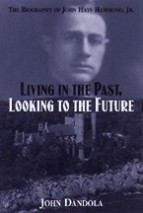
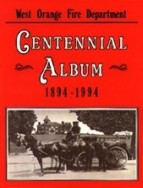


Click on this photo to read John's interview about why he is inspired by Northumberland and other locales he draws upon in his writing |
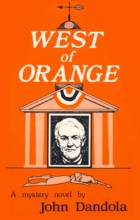
West of Orange™ is a trademark held by John Dandola, Ltd. |

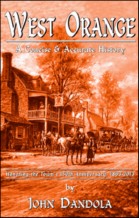
March 14, 2013: The actual 150th Anniversary of the creation of West Orange. The local history column gave it no mention but instead re-ran the biography of a
local colonial girl for the umpteenth time. April 10, 2013: The actual 150th Anniversary of the first West Orange town meeting. The local history column gave it no mention but instead ran an article spotlighting
the 70th wedding anniversary of a local couple and misspelled their name throughout. |
"I was there when the paper was white [blank]." Moss Hart, playwright referencing why creations belong solely to their creators |
"There are always plenty of people around to praise the incompetent as profound." Anthony Burgess, author |
|
|